
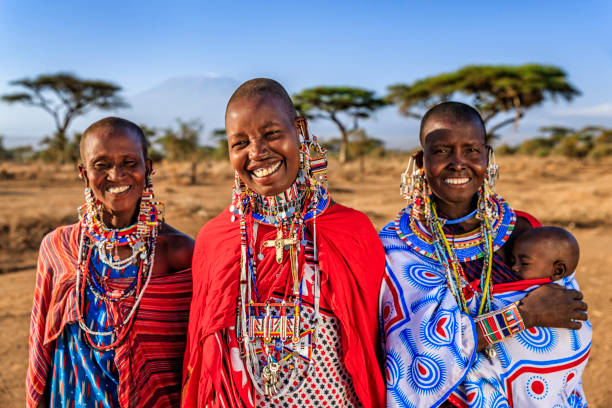

There is a moment on every game drive at Serenity Mara Legends Camp when the savannah opens up before you, and you find yourself wondering about the people who have called this extraordinary landscape home for centuries. The Maasai Mara did not get its name by accident. This land belongs, in the deepest and most meaningful sense, to the Maasai people.
This is a community whose story is as rich, complex, and captivating as the wilderness they have lived alongside for generations. Understanding their culture, their traditions, and their profound connection to this land adds an entirely new and deeply rewarding dimension to your safari experience. And here at Serenity Mara Legends Camp, we believe that knowing the people of the Mara is just as important as knowing its wildlife.
Who Are the Maasai?
The Maasai are a Nilotic ethnic group who migrated southward from the Nile Valley region of northern Africa several centuries ago, eventually settling in the vast savannah landscapes of what is now Kenya and Tanzania. Today, the Maasai community numbers in the hundreds of thousands, spread across the Great Rift Valley and the surrounding plains. The Maasai Mara is named in their honour and sits at the very heart of their ancestral territory.
They are, by any measure, one of Africa’s most recognised and most fascinating indigenous communities. Their distinctive red shukas, their intricate beadwork, their tall and graceful bearing, and their deeply held traditions have made them iconic figures in the story of East Africa. But beyond the visual, beyond the surface, the Maasai are a people of extraordinary depth. They are a community whose values, beliefs, and way of life offer profound lessons about humanity’s relationship with the natural world.
At Serenity Mara Legends Camp, we are honoured to work alongside Maasai guides whose knowledge, passion, and connection to this land enrich every single guest experience we offer. Their story is inseparable from the story of the Mara itself.
A Pastoral People: The Sacred Bond with Cattle
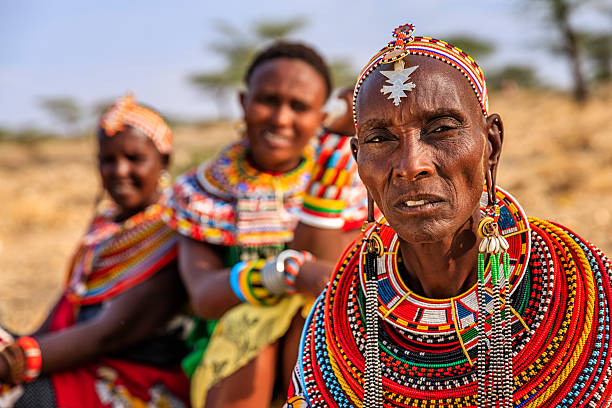
To understand the Maasai, you must first understand their relationship with cattle. For the Maasai, cattle are not simply livestock. They are the foundation of culture, identity, wealth, and spiritual life. Cattle represent prosperity and status. They are central to ceremonies, to marriage negotiations, to community celebrations, and to the daily rhythms of Maasai life. A Maasai elder once said that to count a man’s cattle is to count his soul, and that sentiment captures, better than any other, the depth of this bond.
The Maasai are traditionally semi-nomadic pastoralists, moving with their herds across the landscape in search of water and grazing land. This way of life has shaped their profound understanding of the natural world, its seasons, its patterns, its generosity, and its demands. The Maasai do not simply live in the landscape. They read it, respond to it, and move with it in a relationship of mutual respect that has sustained both people and land for centuries.
This deep ecological knowledge is passed down through generations in stories, songs, and lived experience. It is part of what makes our Maasai guides so extraordinarily valuable on a game drive. When your guide reads the tracks in the earth, interprets the alarm calls of distant birds, or knows instinctively which direction the lion pride moved before dawn, he is drawing on a tradition of landscape knowledge that stretches back further than any textbook.
The Maasai Manyatta: Home in the Wilderness
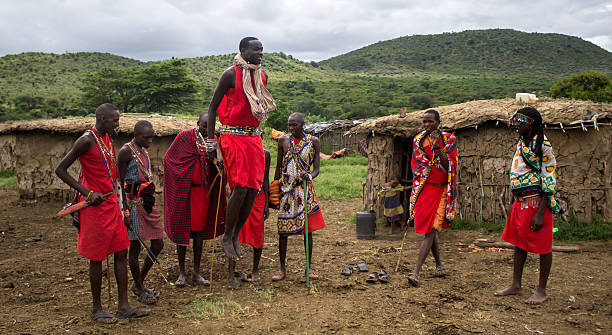
Traditional Maasai communities live in settlements known as manyattas. These are circular enclosures of small, mud-and-dung houses built by the women of the community and surrounded by a thorny acacia fence that keeps the cattle safe and the predators out at night. The design is practical, elegant, and perfectly adapted to the demands of life on the open savannah.
Within the manyatta, life is organised with a clarity and purpose that reflects Maasai values deeply. The community is everything. Individual needs are always balanced against the well-being of the group, and decision-making is a collective, consultative process. It is usually led by the elders whose wisdom and experience command deep respect.
Visiting a traditional Maasai manyatta is one of the most genuinely enriching cultural experiences available to visitors in the Maasai Mara. Our team at Serenity Mara Legends Camp can help arrange cultural visits that are authentic, respectful, and deeply illuminating. It provides a chance to step into a world that operates by entirely different values and rhythms than the one most of us inhabit daily. Ask our team about arranging a cultural experience during your stay, or explore our activities page for more details.
Age Sets and the Journey of a Maasai Warrior
One of the most fascinating and distinctive aspects of Maasai society is its age-set system. It is a structured social framework that defines a man’s role, responsibilities, and identity throughout his life. Understanding this system is key to understanding how Maasai society functions and why it has remained so cohesive and resilient across centuries of change.
Maasai boys begin their journey toward manhood through a series of rituals and rites of passage that mark their progression from boyhood to junior warrior, senior warrior, junior elder, and ultimately senior elder. Each stage carries its own responsibilities, its own privileges, and its own expectations. The transition between stages is marked by ceremonies that are deeply meaningful to the entire community.
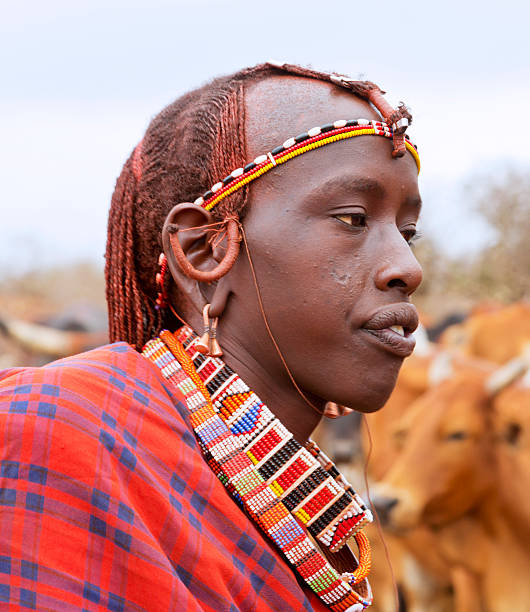
The most celebrated of these transitions is the move from boyhood to junior warrior, or moran. The moran are the young warriors of the community. They are brave, disciplined, and deeply proud of their role as protectors of the people and the cattle. They are recognisable by their distinctive red ochre-covered hair, their elaborate beadwork, and the long-bladed spears they carry with quiet confidence. The Moran embody the values of courage, endurance, and community service that lie at the very heart of Maasai identity.
For visitors to the Maasai Mara, encountering the moran is an experience that leaves a lasting impression. There is a dignity and a groundedness to these young men that commands genuine respect and admiration.
Beadwork, Song, and the Language of Beauty
Maasai culture is rich with artistic expression, and two forms stand out as particularly central to Maasai identity. These are the Maasai beadwork and songs.
Maasai beadwork is among the most intricate and meaningful in Africa. Every piece of jewellery, be it a necklace, bracelet, earring or collar, tells a story. The colours carry specific meanings within Maasai tradition: red represents bravery and blood; blue symbolises the sky and water; green represents the land and sustenance; white represents purity and health; orange and yellow represent hospitality and friendship. A Maasai woman’s beadwork reflects her age, her marital status, her community, and her personal story. It is like a wearable biography crafted with extraordinary skill and care.
Beadwork is made and worn by both men and women in Maasai culture, though women are the primary beaders and the tradition is passed down through generations with great pride and attention to detail. For visitors, purchasing authentic Maasai beadwork is one of the most meaningful souvenirs of a Kenya safari. It’s a piece of art that carries with it a genuine story and a direct connection to the community that created it.
The Maasai song is equally central to cultural life. Music permeates every Maasai ceremony, celebration, and social gathering. The distinctive adumu, or jumping dance, performed by the moran warriors, is perhaps the most iconic expression of Maasai musical culture. Young warriors compete to jump the highest, their voices rising in a hypnotic, rhythmic chant as the circle around them claps and sways. It is a performance of athleticism, community, and joy that is deeply moving to witness. This is one experience that many of our guests describe as one of the most memorable moments of their entire Kenya visit.
The Maasai and Wildlife: A Relationship Rooted in Respect
One of the most important and often misunderstood aspects of Maasai culture is their relationship with the wildlife that shares their landscape. The Maasai have coexisted with lions, elephants, buffalo, and all the other great animals of the savannah for centuries. It is a coexistence that has not always been without tension, but that has been shaped by a fundamental understanding of and respect for the natural world.
Traditionally, the killing of a lion by a young moran warrior was considered an act of great bravery and a rite of passage. This is a practice that has largely been replaced in modern times by community-based conservation initiatives that channel that same courage and pride into the protection of lions rather than their pursuit. Maasai communities across the Mara ecosystem are now among the most active and passionate advocates for wildlife conservation in Kenya. It is a shift that reflects both the adaptability of Maasai culture and the genuine depth of their connection to the land and its creatures.
Our Maasai guides embody this conservation ethic beautifully. Their knowledge of the wildlife, their respect for the ecosystem, and their ability to read and interpret the natural world for our guests come from a lifetime of living alongside these animals. It also stems from a cultural tradition that has always understood, at its most fundamental level, that people and wildlife are part of the same story.
Keeping the Culture Alive: Tradition in a Changing World
The Maasai people face the same pressures that indigenous communities around the world are navigating in the modern era. These include: the pull of urbanisation, the demands of formal education systems, the encroachment of outside cultural influences, and the economic realities of a rapidly changing world. Balancing the preservation of a rich and meaningful cultural heritage with the demands and opportunities of contemporary life is a challenge that Maasai communities are meeting with remarkable thoughtfulness and resilience.
Cultural tourism, done respectfully and responsibly, plays an important role in supporting Maasai communities economically while providing an incentive and a platform for cultural preservation. When visitors engage genuinely and respectfully with Maasai culture, they contribute to an ecosystem of appreciation and support that helps communities maintain their traditions, their language, and their identity in a world that is changing fast.
At Serenity Mara Legends Camp, we are deeply committed to supporting the Maasai communities with whom we share this landscape. Our employment of local Maasai guides and staff is central to this commitment. It ensures that the economic benefits of tourism flow directly into the community, and that the knowledge and pride of the Maasai people remain at the very heart of every guest experience we offer.
Visit our activities page to explore cultural experiences available during your stay, and our accommodation page to plan your perfect base in the heart of Maasai country.
The Land, The People, The Story
The Maasai Mara is not just a wildlife reserve. It is a living, breathing cultural landscape, shaped by the Maasai people across generations and sustained by their continued presence, knowledge, and stewardship. To visit the Mara is to step into that story, and to leave with a deeper understanding of the extraordinary tapestry of life that makes this place so profoundly, so enduringly special. It’s an ecosystem of humans and animals, ancient and modern, all coexisting together.
We are grateful every day to call this landscape home. And we are grateful to share it, and its people, with every guest who walks through our gates.
Are you ready to experience the Maasai Mara in all its depth and richness? Get in touch with our team today and let us help you plan a safari at Serenity Mara Legends Camp that goes beyond the wildlife. Immerse yourself in the culture, the history, and the living, breathing soul of one of the world’s most extraordinary destinations. The Mara and its people are waiting to welcome you to Serenity Mara Legends Camp. This is where the land, the wildlife, and the people tell one magnificent, unforgettable story.